Raising Successful Children, But Are We Raising Good Human Beings?
Rethinking parenting, academic pressure and character development in Bangladesh
For many Bangladeshi families, raising a successful child has become closely associated with securing admission to a reputable school, achieving good examination results and developing strong English-language skills. Parents invest considerable time, money and emotional energy in preparing their children for an increasingly competitive future.
These aspirations are understandable. Education remains one of the most important investments families can make in their children’s future. Yet an important question deserves greater attention: In our pursuit of academic achievement, are we giving equal importance to character, emotional wellbeing and the quality of our relationships with children?
In Dhaka, the pressures of parenting are particularly visible. Long commutes, demanding work schedules, rising educational expenses and limited family time can turn ordinary routines into stressful experiences. Homework becomes another deadline, examination results become a measure of progress, and comparisons with classmates or relatives can gradually shape children’s understanding of success.
The concern is not that parents expect too much from education. Rather, it is whether our expectations always reflect how children learn, develop and experience the world.
When discipline becomes a question of wellbeing
The issue extends beyond academic competition.
According to preliminary findings from the Bangladesh Multiple Indicator Cluster Survey 2025, conducted by the Bangladesh Bureau of Statistics with UNICEF, 86 percent of children aged 1–14 experienced physical punishment or psychological aggression in the preceding month.
This national finding is concerning. Although it does not establish a direct relationship between academic pressure and violent discipline, it highlights the need for a broader conversation about how adults guide children, respond to mistakes and exercise authority.
Discipline is an essential part of upbringing. Children need boundaries, consistency and an understanding of responsibility. However, discipline should not be confused with humiliation, intimidation or fear.
A child who struggles with reading requires support and practice. A child who repeatedly asks questions is demonstrating curiosity. A child who makes mistakes needs opportunities to understand and correct them.
The way adults respond to these everyday situations can influence children’s confidence, willingness to communicate and attitudes towards learning.
The hidden cost of comparison
Comparison has become a familiar feature of childhood in many Bangladeshi households.
Why is another child speaking English more confidently? Why has a cousin already mastered multiplication? Why is a classmate performing better?
Such questions often emerge from genuine parental concern. Nevertheless, children do not develop at identical rates, nor do they share the same strengths, interests or learning needs.
Particularly in the early years, education should provide opportunities for exploration, conversation, play, creativity and social interaction alongside foundational academic skills.
Academic excellence and a happy childhood are not opposing objectives. Indeed, an effective education should help children develop the knowledge, confidence and resilience necessary to pursue achievement without losing their natural curiosity.
The challenge for parents and educators is to establish expectations that encourage progress without making children feel that their worth depends entirely on performance.
What children teach their parents
An equally important dimension of parenting receives comparatively little attention: the personal growth of parents themselves.
Children test our patience, challenge our assumptions and remind us that authority does not necessarily translate into understanding.
A parent may expect immediate obedience while struggling to manage their own frustration. We may teach children to apologise while finding it difficult to acknowledge our mistakes.
These contradictions are not unique to any particular society. They are part of the human experience of raising children.
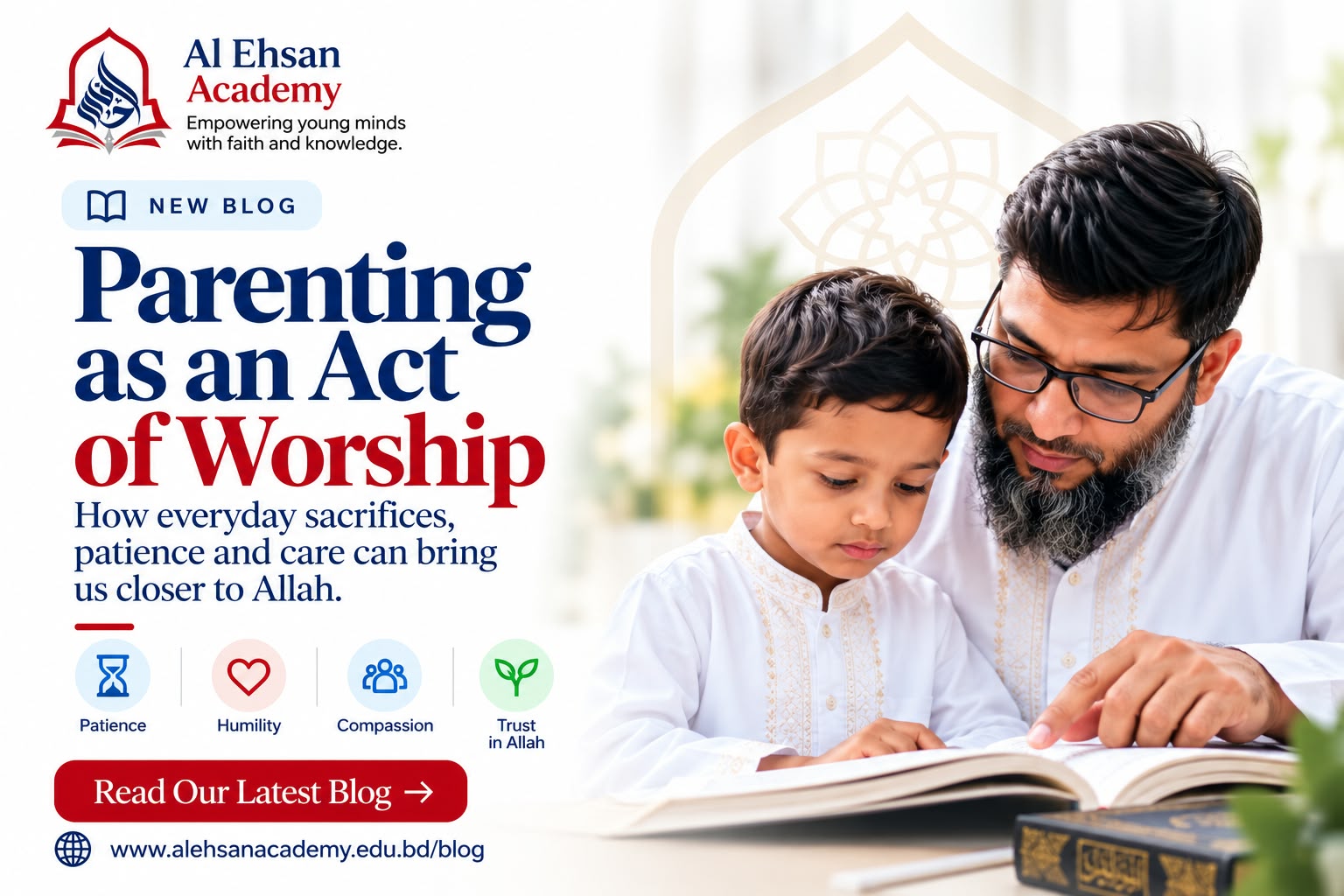
In his essay How Parenthood Can Break the Ego, published by Yaqeen Institute for Islamic Research, Hasan Hameed explores how fatherhood can become a journey of humility, sacrifice and spiritual development.
The reflection is particularly relevant in societies where parental authority is deeply embedded in family relationships.
Parenting requires guidance and discipline, but it also demands the willingness to listen, reconsider our expectations and recognise our own limitations.
A parent’s apology does not necessarily weaken authority. It can demonstrate accountability. Listening to a child’s concerns does not mean abandoning discipline. It can strengthen mutual understanding.
Perhaps the most meaningful form of parental leadership is not the exercise of control, but the example adults set through their own behaviour.
An Islamic perspective on character and responsibility
Within Islamic teachings, raising children carries responsibilities that extend beyond material wellbeing and academic achievement.
Children are commonly understood as an amanah, or trust, requiring care, guidance and moral responsibility.
The Qur’an’s account of Luqman’s advice to his son (Surah Luqman, 31:13–19) offers a valuable framework for upbringing. His guidance encompasses faith, gratitude, prayer, humility, moral responsibility and moderation in conduct.
These principles are not separate from everyday education. Honesty can be practised in the classroom, patience developed through learning difficulties, and compassion demonstrated through relationships with others.
Religious education becomes more meaningful when children observe the values they are taught being practised by the adults around them.
A family that emphasises truthfulness, respectful communication and responsibility provides children with daily examples of character in action.
Schools and families must share the responsibility
The responsibility for a child’s development cannot rest entirely with either parents or schools.
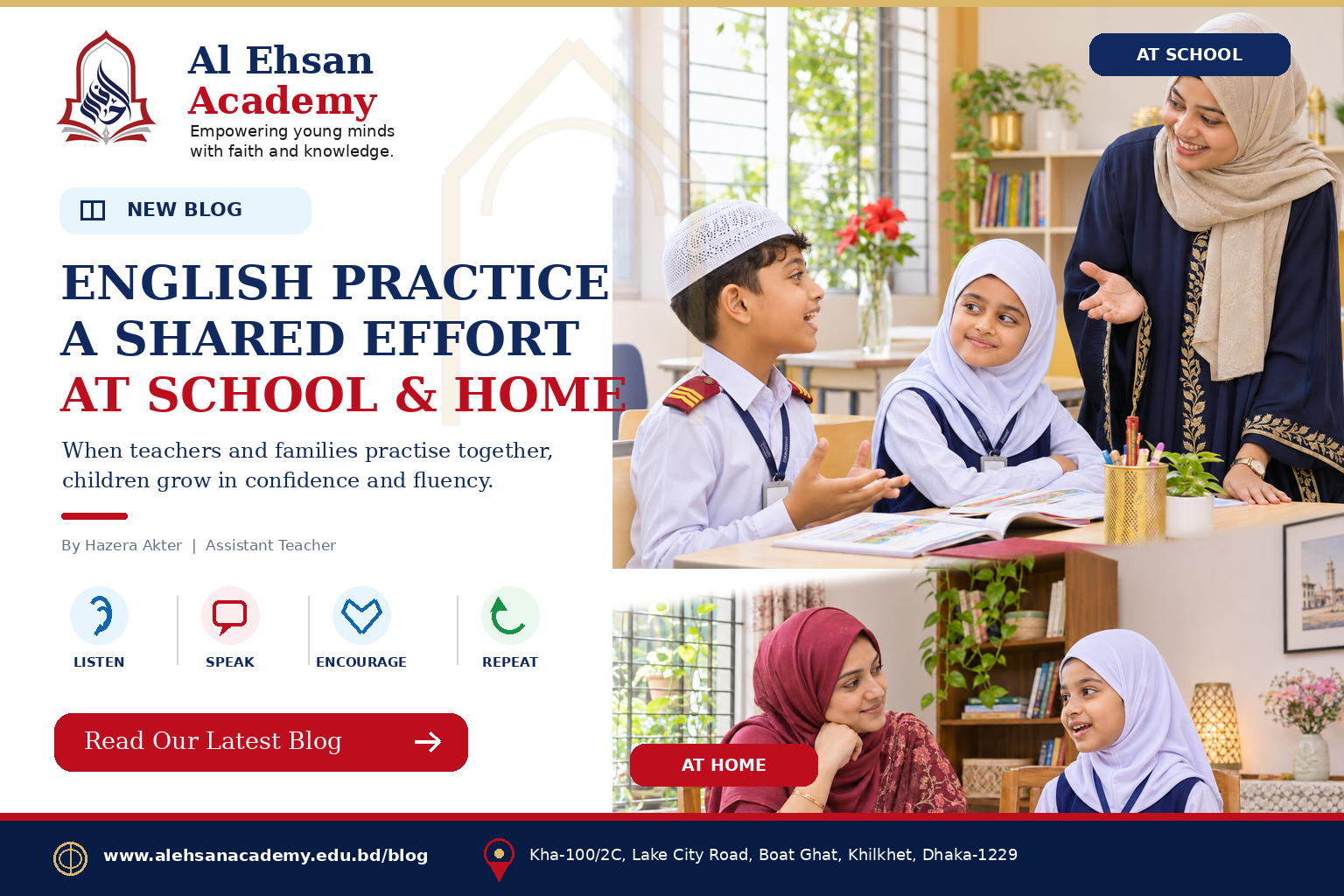
Teachers contribute to academic foundations, communication skills, social development and learning habits. Families reinforce these experiences through conversations, routines and relationships at home.
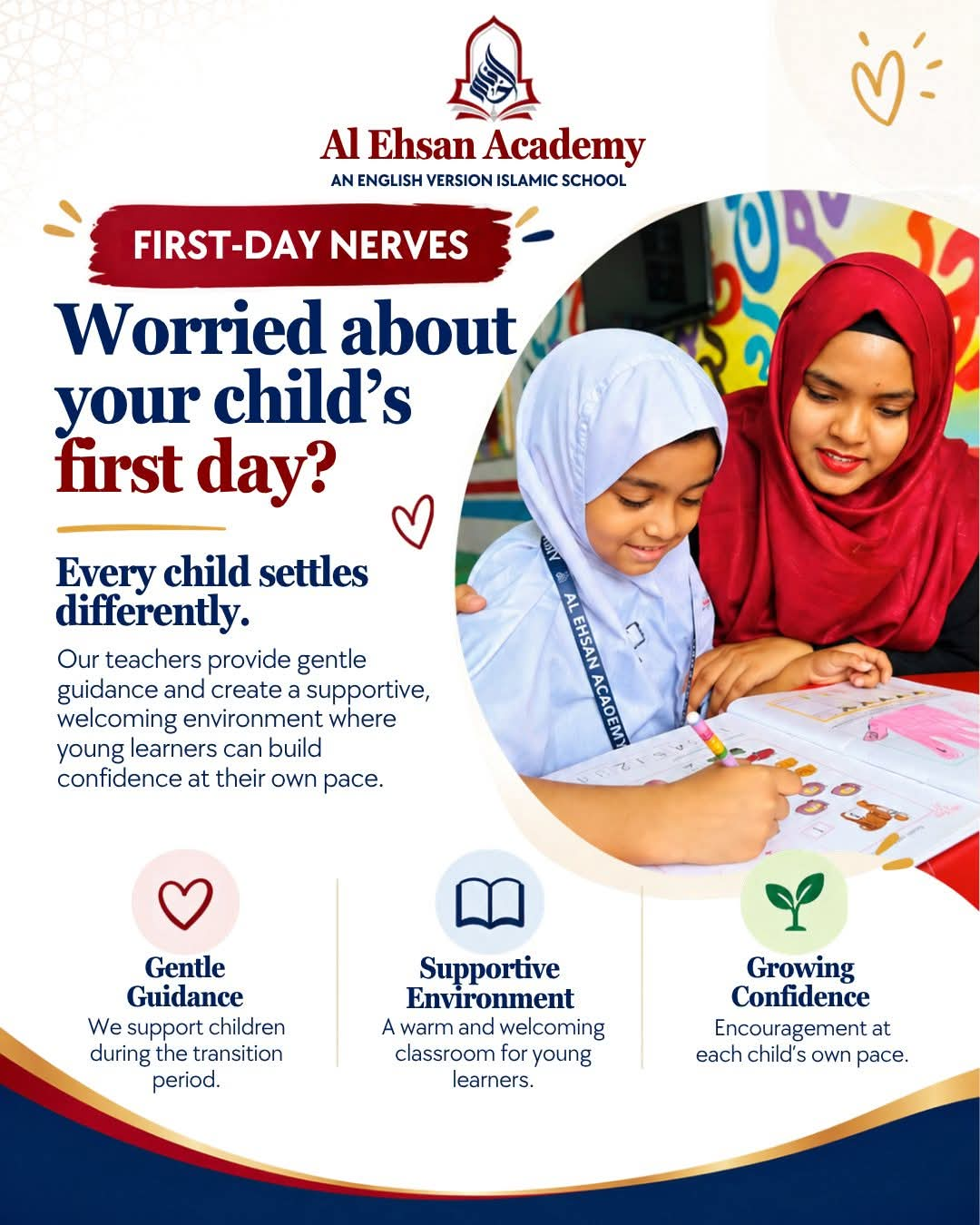
For younger children, particularly those in Play, Nursery, Kindergarten and the early primary years, this partnership is especially important.
A school may encourage curiosity, but that curiosity must also be welcomed at home. Teachers may promote respectful behaviour, but children need to observe similar standards in family life.
At Al Ehsan Academy, our educational philosophy recognises the importance of bringing faith, knowledge and character together. We believe meaningful education should encourage children to ask questions, develop confidence, practise kindness and acquire strong academic foundations.
This approach does not diminish the importance of examination results or educational achievement. Rather, it places them within a broader understanding of what it means to educate a child.
Rethinking the meaning of success
Bangladesh’s educational aspirations should remain ambitious. Our children deserve strong academic foundations, access to opportunities and the skills necessary to navigate an uncertain future.
But ambition must be accompanied by perspective.
A successful childhood cannot be measured exclusively through grades, certificates or comparisons with others. It should also be understood through the development of confidence, empathy, integrity, independence and a willingness to learn.
For parents, this may begin with small changes: listening before correcting, recognising effort alongside results, avoiding unnecessary comparisons and making time for meaningful conversations.
For educators, it means recognising that academic progress and character development are complementary responsibilities.
Ultimately, the question is not whether we should raise academically successful children or good human beings. We should aspire to raise both.
And in pursuing that goal, parents and educators may
discover that raising children is also an opportunity to become more patient,
thoughtful and responsible adults ourselves.
About the Author
Prof. Mazibar Rahman Howlader is the Principal of Al Ehsan Academy. He writes and speaks on education, character development, Islamic values, and the role of schools in nurturing future generations.