


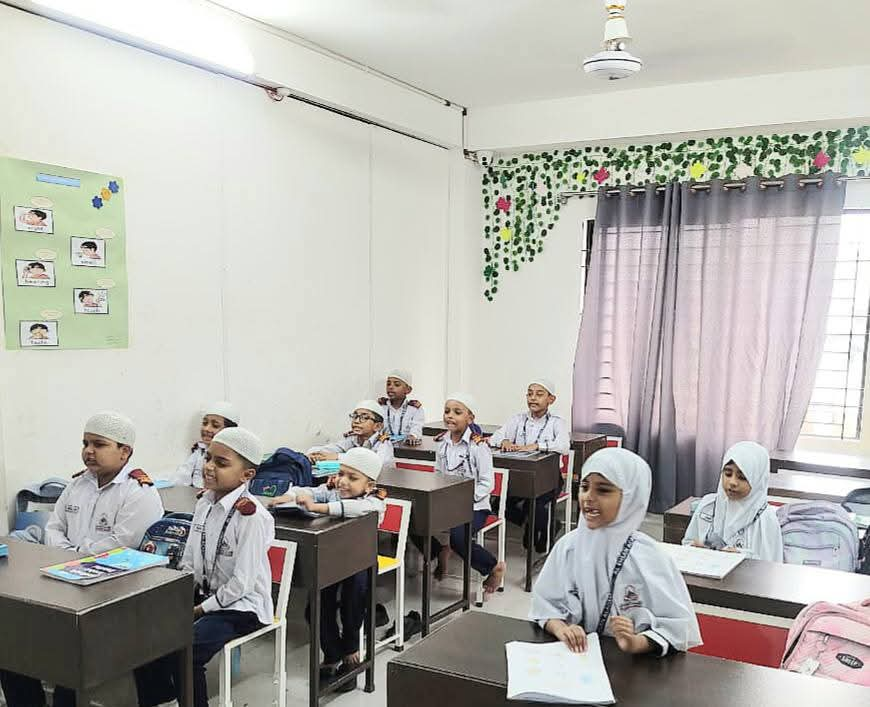
Why Islamic Values and Modern Education Go Hand in Hand
One of the most important decisions parents make is choosing the right educational environment for their children. While academic achievement is often a major consideration, many parents look beyond grades and test scores. They want their children to grow into responsible, confident, and well-rounded individuals.
This raises an important question: should education focus only on academic success, or should it also help shape a child's character and values?
In reality, modern education and Islamic values are not opposing concepts. When combined effectively, they complement one another and help children develop intellectually, socially, and morally.
Education Is More Than Good Grades
Academic success plays an important role in a child's future. Strong foundations in language, mathematics, science, and other subjects help children prepare for higher education and future opportunities. However, education is about much more than examination results.
Children spend a significant part of their lives in school, where they develop habits, attitudes, and perspectives that often stay with them into adulthood. Qualities such as honesty, responsibility, respect, and kindness may not appear on a report card, but they are essential for long-term success in life.
A truly meaningful education helps children build both knowledge and character.
Why Values Matter in Early Childhood
The early years of childhood are among the most influential stages of human development. The lessons children learn during this period often shape their behaviour, decision-making, and interactions with others for years to come.
Values such as discipline, gratitude, empathy, and integrity are best introduced and practised from an early age. When children learn these principles consistently in their everyday environment, they are more likely to carry them into their academic, personal, and social lives.
Parents often recognise that strong character development is just as important as academic achievement, particularly in today's rapidly changing world.
Preparing Children for a Changing World
Modern society is evolving at an unprecedented pace. Children are growing up in a world driven by technology, global communication, and continuous innovation.
To succeed, they need more than factual knowledge. They must develop critical thinking, creativity, collaboration, communication skills, and the ability to adapt to change. Modern education helps students acquire these essential competencies while encouraging curiosity and independent thinking.
A learning environment that embraces both academic excellence and personal growth prepares children to face future challenges with confidence.
Finding the Right Balance
Perhaps the most effective educational approach is one that balances knowledge with character.
Academic learning equips children with the skills they need for future studies and careers. Strong values help them make ethical decisions, build healthy relationships, and contribute positively to their communities.
When these two elements work together, education becomes more than a pathway to professional success. It becomes a foundation for a meaningful and purposeful life.
This balance allows children to grow not only as capable learners but also as responsible individuals who understand the importance of respect, compassion, and personal accountability.
What Should Parents Consider?
When evaluating schools, parents often compare facilities, curriculum, and academic performance. These factors are certainly important.
At the same time, it is worth considering how a school supports character development, encourages positive habits, and creates a learning environment where children feel respected, valued, and motivated.
A child's future is influenced not only by what they learn, but also by the values they practise, the experiences they gain, and the environment in which they grow.
Final Thoughts
The goal of education should not simply be to prepare children for examinations. It should prepare them for life.
By combining modern educational practices with strong moral and ethical values, children can develop the knowledge, confidence, and character needed to navigate an increasingly complex world. A balanced educational approach helps young learners grow into individuals who are capable, responsible, and ready to make positive contributions to society.
-Al Shahriar Sojol
Administrator, Al Ehsan Academy